SOLOMON STAR - National News
Wednesday, 28 January 2009
SOLOMON Islanders have been encouraged to engage in the coconut down stream processing as the country prepares to cease copra export next year.
The Commodities Export Marketing Authority’s (CEMA) Development and Extension Officer Alfred Ramo uttered the encouragement at the handing over of a manual coconut pressing machine to the Ontong Java Farmers Association, in Honiara, last week.
A local distributor, Set Marketing & Advertising Agency, provided the equipment to the association at the cost of $20,000. The equipment will allow farmers to extract pure virgin oil.
Mr Ramo told the association members that there would be no more copra exports as of next year.
He encouraged local farmers to venture into downstream processing of coconut product.
"One of the products is pure coconut virgin oil," he said.
Mr Ramo commended the association for its initiative to produce pure coconut oil over the years. It is a step in the right direction in preparation for the changes.
"This is a right move and a step into achieving what CEMA wants to see in the country as of next year," he said.
Throughout the world, he said, many countries have ventured into producing their own pure coconut oil.
If more rural farmers produce pure coconut oil, he said, the country would not import coconut oil overseas. In return, the farmers would earn money from the export and sales of their products.
The export of copra was halted because coconut mills in Europe, which usually buy copra from Solomon Islands, have closed down and concentrated on importing coconut oil.
Solomon Islands has no option but to be part of this world-wide undertaking. Solomon Islands will be processing copra to produce oil to attract higher prices.
The coconut oil production, he said, will also benefit exporters in terms of volume, freight and monetary returns. This process attracted higher returns compared to copra production.
Mr Ramo said the move is in line with CEMA's plans. CEMA had previously established six copra crashing mills throughout the country.
The mills were established in Tenaru on Guadalcanal, Gojoruru on Isabel, Kaonasughu on Makira, Malu'u on Malaita, Lata in Temotu Province, Tarakukure on Choiseul and Noro in the Western Province.
By MOFFAT MAMU
Showing posts with label Banabans. Show all posts
Showing posts with label Banabans. Show all posts
Thursday, 29 January 2009


Friday, 23 January 2009
Switching to Coconut Oil can Prevent Diabetes
Natural News - Natural Health, Natural Living
Coconut oil is an ancient super food that has been an essential component to many of the earth's healthiest cultures. Cultures that have consumed high amounts of coconut oil generally have not suffered with diabetes, as well as many other diseases. Unfortunately, as many of these people abandon their traditional ways of eating, they begin to suffer with diabetes, since coconut oil has been shown to protect people from this illness.
For example, the people who live on the island of Nauru in the South Pacific have enjoyed a diet of mostly bananas, yams and coconuts. Diabetes was a completely unknown illness. As the island became healthier and their lifestyle and diet began to include refined flour, sugar and vegetable oils, diabetes appeared. According to the World Health Organisation, up to one half of the urbanised Nauru population age 30 - 64 are diabetic today.
Although few people make the association between refined vegetable oils and diabetes, the link has been well researched. In the 1920s Dr. S. Sweeney studied the effects of vegetable oil on his student. His research showed that a diet high in vegetable oil could cause reversible diabetes within 48 hours in subjects who had not been previously diabetic. A 1998 study published in Metabolism showed that diabetes could be reversed by cutting out polyunsaturated fat. The same results have also been shown in humans.
What is the Difference Between Coconut Oil and Vegetable oils?
There is a molecular difference between coconut oil and all other common vegetable oils such as olive, sunflower and safflower oil. The molecules that make up these polyunsaturated oils are made up of a long chain of fatty acids. On the other hand, virgin coconut oil is made up of smaller molecules or medium chain fatty acids.
Long chain fats are either deposited in blood vessels as cholesterol or stored around the waist, thighs and buttocks as energy stores of fat for emergencies. Medium chain fatty acids are used immediately as a source of energy.
Why Regular Oils Can Potentially Cause Diabetes
Most people with diabetes are on strict low fat, high carbohydrate diets in which the limited fats allowed are restricted to polyunsaturated vegetable oils such as olive, safflower, or sunflower oils. However, studies have shown that if the fats consumed are polyunsaturated, long chain fats, this decreases cell's ability to bind with insulin, and reduces their ability to absorb glucose...especially when these oils are heated during cooking. In other words, polyunsaturated long chain fats, commonly thought to be "healthy", actually make diabetes WORSE!
Furthermore, polyunsaturated vegetable oils can cause free radical damage to the cells, and adversely affect their ability to function. The bottom line is that cooking with polyunsaturated vegetable oils, such as sunflower oil and olive oil, should be avoided by people with diabetes.
Why is Coconut Oil so Beneficial for Diabetes?
The smaller and more easily absorbed medium chain molecules found in coconut oil supply the cells with essential fatty acids without inhibiting insulin and without glucose, so they combat insulin resistance. Virgin coconut oil is a totally unique super food that serves as an energy boost to the body, without causing a spike in blood sugar levels.
Researchers have discovered that while heavy foods (including polyunsaturated oils) slow down the metabolism, organic coconut oil actually stimulates the metabolism to assist the fat burning process, even when they are heated. In simple terms, simply substituting your normal cooking oils with coconut oil can be a tremendous remedy for diabetes, and, along with avoiding sugar and getting plenty of exercise, can help prevent people who don't suffer from this dangerous disease from suffering later in life.
Coconut oil is an ancient super food that has been an essential component to many of the earth's healthiest cultures. Cultures that have consumed high amounts of coconut oil generally have not suffered with diabetes, as well as many other diseases. Unfortunately, as many of these people abandon their traditional ways of eating, they begin to suffer with diabetes, since coconut oil has been shown to protect people from this illness.
For example, the people who live on the island of Nauru in the South Pacific have enjoyed a diet of mostly bananas, yams and coconuts. Diabetes was a completely unknown illness. As the island became healthier and their lifestyle and diet began to include refined flour, sugar and vegetable oils, diabetes appeared. According to the World Health Organisation, up to one half of the urbanised Nauru population age 30 - 64 are diabetic today.
Although few people make the association between refined vegetable oils and diabetes, the link has been well researched. In the 1920s Dr. S. Sweeney studied the effects of vegetable oil on his student. His research showed that a diet high in vegetable oil could cause reversible diabetes within 48 hours in subjects who had not been previously diabetic. A 1998 study published in Metabolism showed that diabetes could be reversed by cutting out polyunsaturated fat. The same results have also been shown in humans.
What is the Difference Between Coconut Oil and Vegetable oils?
There is a molecular difference between coconut oil and all other common vegetable oils such as olive, sunflower and safflower oil. The molecules that make up these polyunsaturated oils are made up of a long chain of fatty acids. On the other hand, virgin coconut oil is made up of smaller molecules or medium chain fatty acids.
Long chain fats are either deposited in blood vessels as cholesterol or stored around the waist, thighs and buttocks as energy stores of fat for emergencies. Medium chain fatty acids are used immediately as a source of energy.
Why Regular Oils Can Potentially Cause Diabetes
Most people with diabetes are on strict low fat, high carbohydrate diets in which the limited fats allowed are restricted to polyunsaturated vegetable oils such as olive, safflower, or sunflower oils. However, studies have shown that if the fats consumed are polyunsaturated, long chain fats, this decreases cell's ability to bind with insulin, and reduces their ability to absorb glucose...especially when these oils are heated during cooking. In other words, polyunsaturated long chain fats, commonly thought to be "healthy", actually make diabetes WORSE!
Furthermore, polyunsaturated vegetable oils can cause free radical damage to the cells, and adversely affect their ability to function. The bottom line is that cooking with polyunsaturated vegetable oils, such as sunflower oil and olive oil, should be avoided by people with diabetes.
Why is Coconut Oil so Beneficial for Diabetes?
The smaller and more easily absorbed medium chain molecules found in coconut oil supply the cells with essential fatty acids without inhibiting insulin and without glucose, so they combat insulin resistance. Virgin coconut oil is a totally unique super food that serves as an energy boost to the body, without causing a spike in blood sugar levels.
Researchers have discovered that while heavy foods (including polyunsaturated oils) slow down the metabolism, organic coconut oil actually stimulates the metabolism to assist the fat burning process, even when they are heated. In simple terms, simply substituting your normal cooking oils with coconut oil can be a tremendous remedy for diabetes, and, along with avoiding sugar and getting plenty of exercise, can help prevent people who don't suffer from this dangerous disease from suffering later in life.
Sunday, 12 November 2006
Book on Banaban History
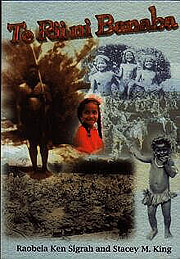
Learn More about the Banaban People and their history
To learn more about the Banaban people and their unique history read 'TE RII NI BANABA' by Raobeia Sigrah & Stacey King
Copies Available at: http://stores.ebay.com.au/Nature-Pacific
This is what others are saying: http://www.banaban.com/K&SBookreview.htm
Subscribe to:
Posts (Atom)